
合計: 2459 / 2459

エキストラ

This lesson explores how diverse cultures can coexist and why mutual respect and acceptance matter.

In this lesson, you will learn what a seismograph is and how earthquakes are measured.

The lesson helps learners understand why people react differently and how they can become more empathetic.

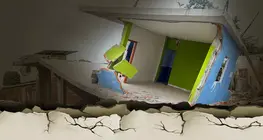
The Tōhoku earthquake, with a magnitude of 9.0, and the subsequent tsunami caused severe destruction and claimed thousands of lives on the northeast coast of Japan.

In this lesson, we examine how our identity is constructed and how it is influenced by society.

In this lesson, you will learn about ancient Greek philosophers and practice Socratic questioning.

In this lesson, you will learn about the structure and functioning of the Spartan city-state.

How did Carthage become an empire, and how did it eventually disappear?

This lesson presents the fundamental values of the EU and their everyday significance, emphasising that they concern us as well and that we also have a role in upholding them.

In this lesson, you will learn how crop rotation is applied in agriculture.

In this lesson, you will learn about the concept of fish farming, its economic and social benefits, and the positive impact it has on the environment.

The seas provide food, raw materials, and transportation opportunities, but their use can also cause environmental pollution.

This lesson explores how globalisation appears in everyday life.

In this lesson, you will learn about the effects of globalisation on human society and on the environment.

In this lesson, you will learn about global climate change, the role of humans in the process, and its consequences.

The lesson shows, through everyday situations, what makes a family or school community democratic.

Ez a lecke bemutatja, hogyan indította el Tengerész Henrik a nagy földrajzi felfedezések korát.

The lesson explains how self-reflection supports responsible decision-making in everyday life.

The lesson presents the difference between crime and deviance, as well as the role of social reactions.